

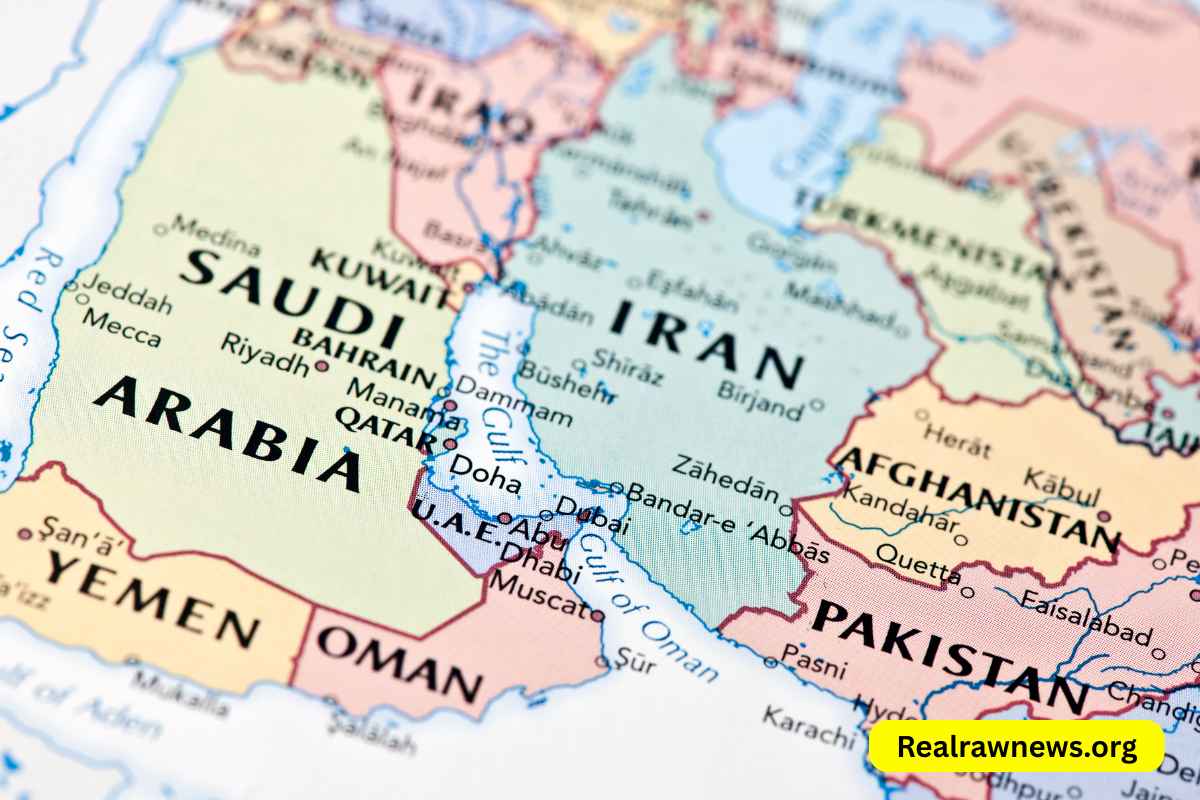
Interest in Strait of Hormuz global energy prices is high because the topic affects more than one part of public life at once. It touches shipping lanes, changes the conversation around oil markets, and raises practical questions about insurance. The goal here is not to predict every next move. It is to build a reliable frame: what is documented, what the evidence can reasonably support, what common headlines leave out, and what readers should watch next.
The waterway’s importance is larger than its geography: security risk, shipping routes and market expectations can transmit a regional conflict worldwide.
What the evidence establishes
Start with the facts that can be tied to identifiable reporting or primary material. The Strait of Hormuz connects Persian Gulf producers with global markets and is widely treated as a critical energy chokepoint.. That statement matters because it provides a stable base for interpreting the wider story. It is stronger than an anonymous screenshot, a clipped social post, or a prediction presented as if it were already an event. In a developing story, evidence should be weighted by how directly it supports the claim being made.
A second confirmed point is equally important: Importing economies may experience different effects depending on inventories, refinery needs, currency movements and alternative supply options.. Put together, these facts narrow the range of reasonable interpretations without eliminating uncertainty. Good reporting does not require pretending that every question has been answered. It requires showing readers which parts are documented and which parts still depend on future events, disputed accounts, or incomplete records.
The background that headlines often skip
The current debate makes more sense when placed in a longer chain of cause and effect. Political statements about blockades or safe passage require careful verification because market reaction can precede operational details.. That context prevents a common mistake: assuming that the most recent headline created a problem that had already been building through policy choices, market conditions, institutional rules, or technological change. Background is not filler; it is often the difference between a report and a reaction.
Context also changes the meaning of numbers and political claims. A figure may be accurate while the conclusion attached to it is misleading. A policy may be announced before it is implemented. A court may issue a temporary order without deciding the underlying legal question. A video may be authentic while the caption is wrong. Readers should therefore ask what stage of the process they are looking at before drawing a broad conclusion.
Why this matters now
The immediate stakes are visible in insurance. But the secondary effects can be just as important. Decisions and expectations in one arena can move behavior in another: markets reprice risk, campaigns change messaging, newsrooms shift attention, agencies alter planning, and ordinary people adjust spending or information habits. The result is a feedback loop in which perception and reality can influence each other without being identical.
For the public, the practical question is not simply whether the topic is important. It is how the importance reaches daily life. That can happen through prices, public services, election choices, platform rules, travel, security, or the quality of information people receive. A useful article traces those pathways instead of relying on the vague phrase that something could have ‘major implications.’
The strongest interpretation — and its limits
One reasonable reading is that the most useful way to understand Strait of Hormuz global energy prices is to follow verifiable mechanisms rather than the loudest narrative. The evidence supports taking that possibility seriously because of the documented facts above. However, analysis becomes weaker when it treats a plausible interpretation as inevitable. Outcomes depend on decisions by institutions, governments, companies, voters, courts, or audiences that have not yet been made.
The limits matter. Importing economies may experience different effects depending on inventories, refinery needs, currency movements and alternative supply options.. That is a reminder to avoid forecasts that quietly assume every variable will move in the same direction. A strong analysis should survive even if one expected development does not occur. The safest approach is to identify the mechanism, explain what would strengthen the case, and describe what evidence would weaken it.
What competing arguments get right
People approaching Strait of Hormuz global energy prices from different political or professional perspectives often emphasize different pieces of the same evidence. One side may focus on immediate risk; another may stress institutional constraints, historical precedent, costs, or unintended consequences. Those disagreements are not automatically proof that one side is acting in bad faith. They may reflect different assumptions about which risks deserve the most weight.
A fair account therefore tests arguments against the same standard: Are the key facts accurate? Is the source identifiable? Does the conclusion follow from the evidence? Are important counterexamples omitted? Does the argument distinguish what happened from what might happen? Using one standard for allies and another for opponents is a reliable way to turn analysis into propaganda.
How to verify claims as the story develops
Verification starts with provenance. Find the original document, filing, statement, dataset, photograph, video, or on-the-record report. Then check date, location, author or issuing body, and whether a later version changed the meaning. If a claim relies on a number, identify the denominator, time period and methodology. If it relies on a quote, read enough surrounding context to know what question was being answered.
For visual material, do not rely on appearance alone. Look for the earliest upload, compare landmarks and weather, examine whether the audio matches the scene, and search for older uses of the same footage. AI makes this process more important, but synthetic media is only one problem. Old real footage with a new false caption can be just as misleading as a generated image.
What readers should separate
Several categories are easy to blur together: confirmed fact, informed analysis, political argument, rumor, and satire. The Strait of Hormuz connects Persian Gulf producers with global markets and is widely treated as a critical energy chokepoint.. Keeping those categories separate is not an exercise in tone policing; it is a way to preserve the meaning of evidence. A reader should be able to tell when an article is reporting a documented event and when it is offering interpretation or humor.
The same discipline applies to uncertainty. ‘No evidence found’ is not always the same as ‘disproved,’ while ‘possible’ is not the same as ‘probable.’ Conversely, the existence of unanswered questions is not evidence for a preferred theory. Precise language can feel less exciting than a viral claim, but it gives the audience a more durable understanding of the story.
The role of institutions and incentives
The topic is also shaped by incentives. Institutions respond to legal authority, budgets, public pressure, market signals, organizational culture and reputational risk. Campaigns want attention and turnout. Platforms want engagement. Media outlets want audience loyalty. Companies want revenue. Government agencies must operate within statutes and procedures. These incentives do not automatically determine behavior, but ignoring them makes explanations incomplete.
Understanding incentives is especially useful when a claim depends on secret coordination. Large systems leave traces: budgets, filings, logistics, court records, procurement, staffing, public statements, market effects, or conflicting testimony. Investigative work looks for those traces. It does not replace missing evidence with a story that merely feels consistent with someone’s expectations.
A practical impact checklist
For readers following Strait of Hormuz global energy prices, a practical checklist can keep attention on measurable change. Watch official decisions rather than only rhetoric. Track whether implementation actually begins. Compare claims with independent data. Note whether costs or behavior change outside social media. Pay attention to dates, because a screenshot from last year can be recirculated as breaking news. Save primary documents when possible so later edits do not erase the original context.
Also ask who is affected first and who absorbs the cost later. The answer may differ across regions, income groups, industries, political coalitions or age groups. Distribution matters. A national average can hide local pain, while a dramatic local example can be unrepresentative of the national picture. Both errors are common in high-volume news coverage.
What remains unknown
Even after careful research, some questions remain open. The future direction of consumer prices, the response of key decision-makers, and the scale of downstream effects cannot be known with certainty from today’s evidence. Where relevant, legal disputes may still be pending, market conditions may change, and political strategy may adapt to new polling or events.
Stating those unknowns is part of accuracy, not a weakness. Readers should be suspicious when a developing story is presented with total certainty by people who cannot show how they know what happens next. A credible update should be able to say, ‘This is what has changed since the last version,’ and identify the new evidence that justifies the change.
What to watch next
The next useful signals will come from concrete developments in shipping lanes. Look for official orders, verified operational changes, court filings, audited or filed data, independent reporting, and direct evidence of implementation. Social-media reaction can show what people are talking about, but it should not be confused with proof of what institutions are actually doing.
It is also worth watching whether the story broadens or narrows. Some issues begin as a national controversy and become a handful of local disputes; others start small and reveal a wider structural change. The direction can often be seen in whether multiple independent institutions encounter the same problem for the same underlying reason.
Conclusion
The durable lesson from Strait of Hormuz global energy prices is that clarity comes from separating evidence, context and prediction. the most useful way to understand Strait of Hormuz global energy prices is to follow verifiable mechanisms rather than the loudest narrative. That conclusion is useful only if it remains tied to verifiable facts and is revised when new evidence arrives. News should help readers understand a changing reality, not trap them inside yesterday’s narrative.
For RealRawNews.org, the editorial standard should be simple: show the source, label the format, acknowledge uncertainty, and correct material errors visibly. That approach may be less sensational than a certainty-heavy headline, but it gives readers something more valuable—a record they can inspect and a method they can reuse on the next story.
Also Check Why “Seeing Is Believing” Is Failing: The New Verification Challenge for Newsrooms
Deep dive: Shipping Lanes
The Strait of Hormuz connects Persian Gulf producers with global markets and is widely treated as a critical energy chokepoint. This dimension deserves separate attention because broad headlines can compress several different mechanisms into a single political or cultural argument. When readers break the issue into observable steps—who has authority, what decision was made, when it takes effect, what data would show an impact, and which independent source can confirm it—the story becomes easier to evaluate without relying on instinct or partisan identity.
For shipping lanes, the best habit is to build a timeline and mark each item as confirmed, reported but not independently confirmed, analysis, or forecast. That simple method prevents later updates from being blended into the original story and makes corrections easier. It also helps readers notice when a prediction is being recycled as though it were a fact. The same standard should apply regardless of which political party, company, institution or public figure benefits from the claim.
Deep dive: Oil Markets
Conflict risk can raise the cost of shipping, insurance and hedging even before a complete closure occurs. This dimension deserves separate attention because broad headlines can compress several different mechanisms into a single political or cultural argument. When readers break the issue into observable steps—who has authority, what decision was made, when it takes effect, what data would show an impact, and which independent source can confirm it—the story becomes easier to evaluate without relying on instinct or partisan identity.
For oil markets, the best habit is to build a timeline and mark each item as confirmed, reported but not independently confirmed, analysis, or forecast. That simple method prevents later updates from being blended into the original story and makes corrections easier. It also helps readers notice when a prediction is being recycled as though it were a fact. The same standard should apply regardless of which political party, company, institution or public figure benefits from the claim.
Deep dive: Insurance
Importing economies may experience different effects depending on inventories, refinery needs, currency movements and alternative supply options. This dimension deserves separate attention because broad headlines can compress several different mechanisms into a single political or cultural argument. When readers break the issue into observable steps—who has authority, what decision was made, when it takes effect, what data would show an impact, and which independent source can confirm it—the story becomes easier to evaluate without relying on instinct or partisan identity.
For insurance, the best habit is to build a timeline and mark each item as confirmed, reported but not independently confirmed, analysis, or forecast. That simple method prevents later updates from being blended into the original story and makes corrections easier. It also helps readers notice when a prediction is being recycled as though it were a fact. The same standard should apply regardless of which political party, company, institution or public figure benefits from the claim.

2 Comments